Screwdrivers
JIS vs Phillips: why your screwdriver keeps camming out
Two cross-head standards look nearly identical and are not interchangeable. Using the wrong one is the single most common cause of a rounded screw head in electronics and Japanese machinery work.
Phillips is designed to slip
The Phillips head was designed in the 1930s for assembly lines that had no torque control. The flanks are tapered so that past a certain torque the driver rides up and out of the recess. That behaviour, known as cam-out, was a feature. It stopped operators over-tightening and snapping fasteners before torque-limiting drivers existed.
It is still in the geometry today. A Phillips driver in a Phillips screw will cam out under load by design.
JIS is designed to stay put
The Japanese Industrial Standard cross-head, JIS B 4633, has flatter flanks and no cam-out ramp. It is meant to be driven to full torque without climbing out, which is why it is used across Japanese electronics, motorcycles, marine engines and cameras.
JIS screws are often marked with a single raised dot or a small depression next to the recess. If you see that dot, the fastener is JIS.
What happens when you mix them
A Phillips driver in a JIS screw sits high in the recess and contacts only the outer corners. Under torque it rotates, rounds those corners and destroys the head. This is the failure most people blame on "cheap Japanese screws".
The reverse, a JIS driver in a Phillips screw, is far less destructive. The JIS tip seats deeper and grips more of the flank. Many technicians run JIS drivers on everything for exactly this reason.
What to buy
If you work on anything Japanese, buy JIS. It is not an upgrade, it is the correct tool, and the price difference is negligible.
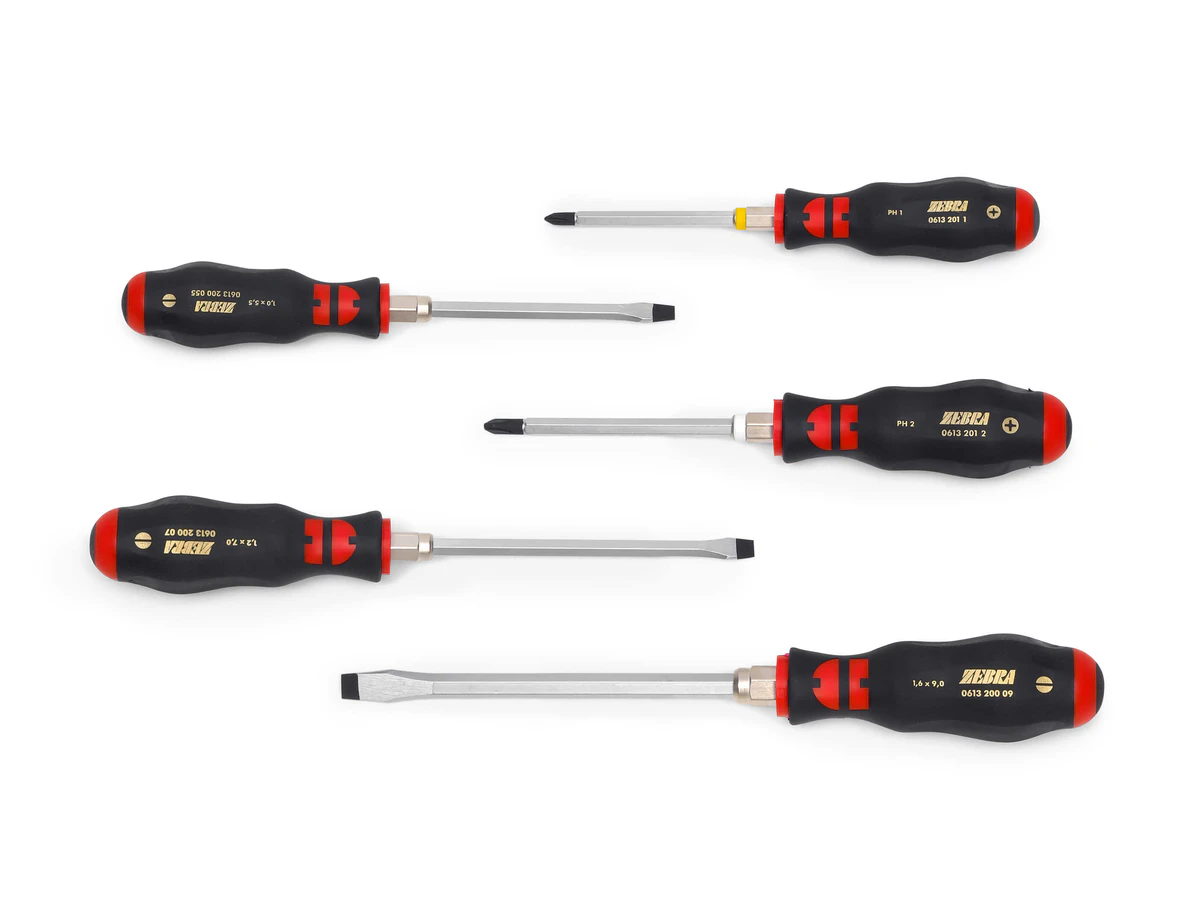
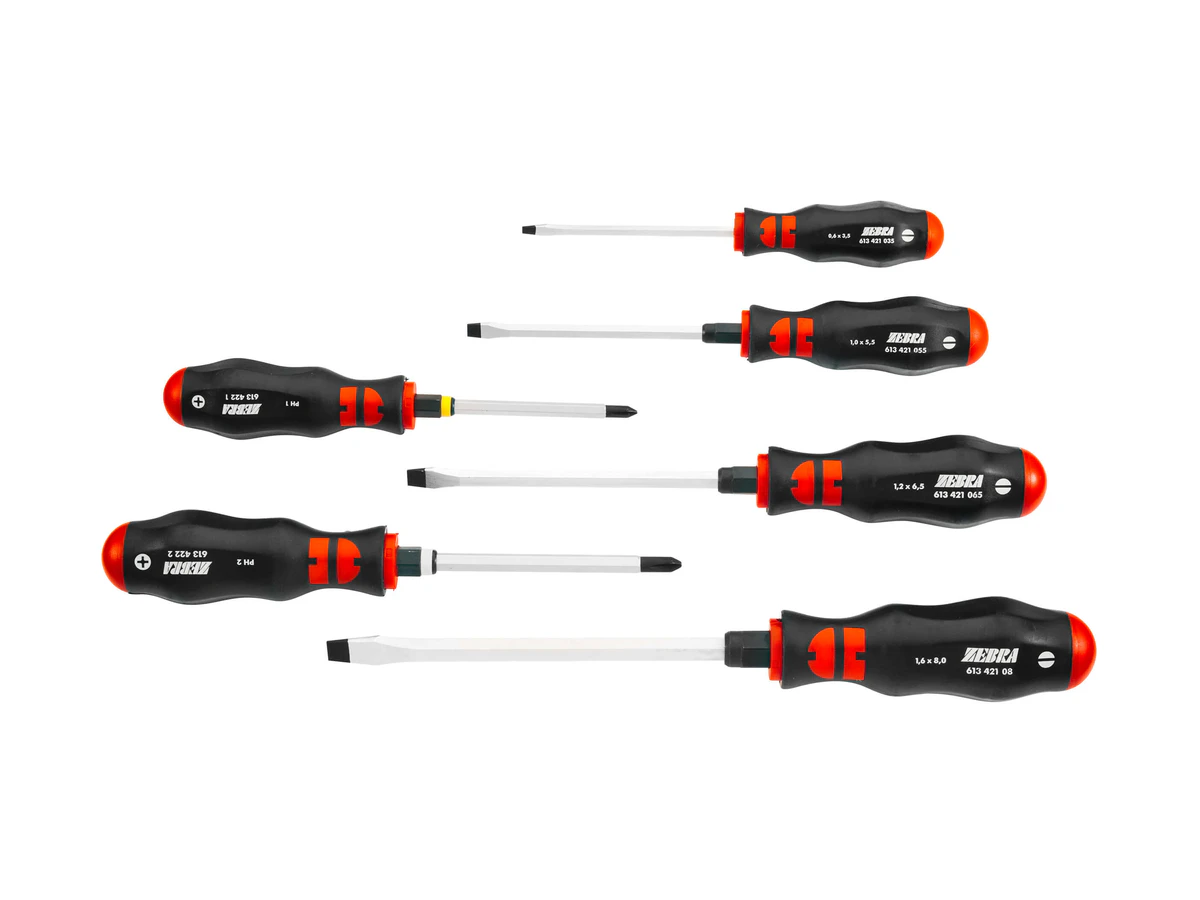
- General bench work: a cushion-grip JIS driver in +1 and +2 covers most fasteners
- Seized or corroded fasteners. A through-handle strikeable driver, so you can shock the joint before applying torque
- Electronics and instruments. A precision JIS set with ESD-safe handles and rotating caps
A note on sizing
JIS sizes are written +0, +1, +2, +3 and correspond roughly, but not exactly, to PH0–PH3. When in doubt, the driver that seats deepest with no rock is the right one. If the driver rocks in the recess at all, it is too small, and driving it will damage both the screw and the tip.
How we write these. Guides are written by the people who pick and specify these tools. We sell the products mentioned, and we say so, but where the honest answer is that a cheaper tool does the job, that is what the guide says. If you think something here is wrong, tell us at support@exelproddistribution.com and we will correct it and note the change.